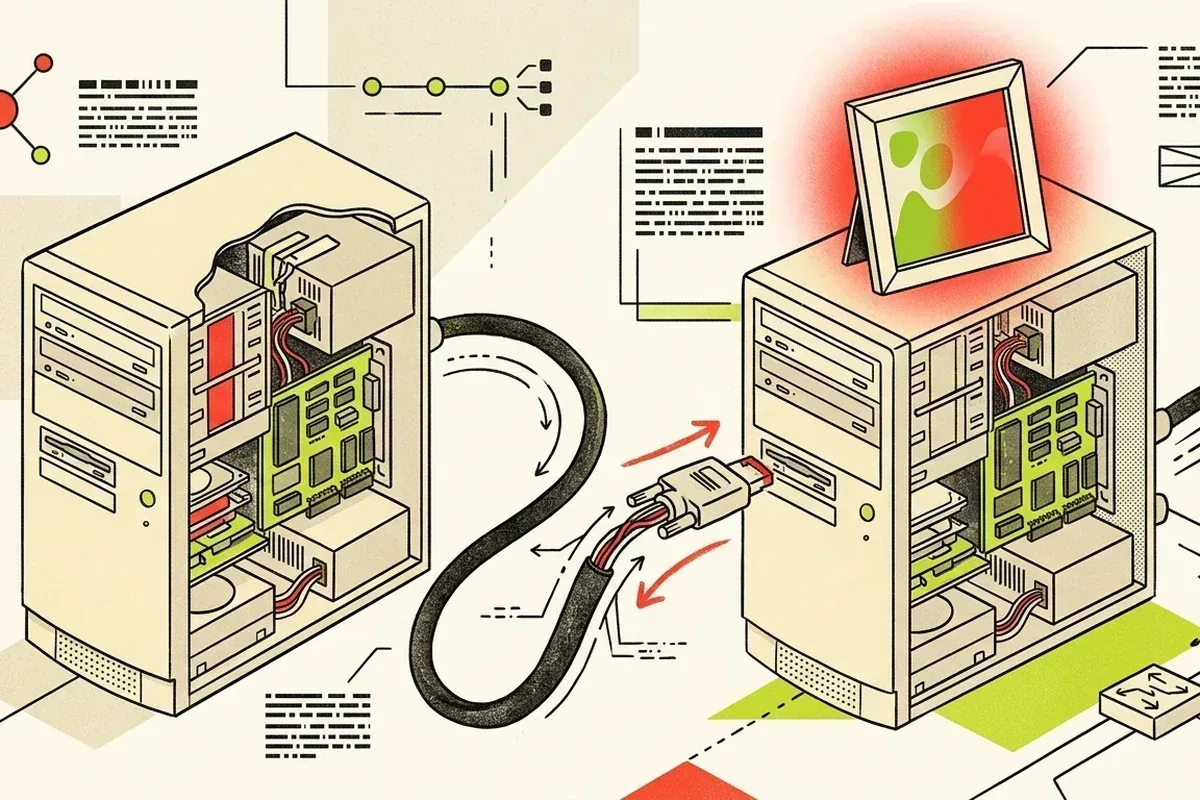
Hotlinking in one request chain
Hotlinking loads a remote asset inside a different site's page.
The remote host bears the request and retains control over what the asset URL returns.
A contextual HTML response can preserve an old image path without silently serving the original media.
What the browser actually does
An HTML image element contains a source URL. If that URL names another host, the browser contacts that host when rendering the page. The embedding site supplies the surrounding page; the remote server supplies the asset bytes.
The two requests can have separate cache rules, security policies, logs, and availability. A page may load successfully while the remote image fails, changes, or returns an access-denied response.
Why site owners objected
Historically, hosting plans often charged for transfer or imposed low bandwidth limits. A popular external forum could generate costs for the image owner without sending visitors to the owner's page, credit, warning, or navigation.
The remote owner also lost control of context. An ordinary file could appear inside a misleading or abusive post, while an explicit file could be embedded where viewers never chose to visit its original site.
Blocking and replacement
Servers can inspect request information such as the Referer header and refuse likely cross-site embedding. They can also require signed URLs, use access-control services, or replace the asset. These controls are imperfect because referrer information can be reduced or omitted and legitimate uses may look similar.
A replacement is sometimes called a hotlink switch or image swap. Because the embedding page still points to the same remote URL, changing the file can alter every external page that loads it. That possibility made hotlinking both a resource dispute and a prank surface.
How to publish responsibly now
Host assets you are licensed to use, credit their source where required, and link readers to the original page instead of pulling a file without context. For volatile third-party material, use a text link with a warning rather than automatic embedding.
When preserving a historic direct-image URL, a server can return a contextual HTML placard instead of the old media. The citation remains intelligible, yet browsers and external sites cannot silently embed the explicit artifact.
Hotlinking mechanics and ownership questions
Does hotlinking copy the image onto the embedding server?
Usually no. The embedding page references the remote URL, and each visitor's browser requests the file from that remote host.
Why can a hotlinked image suddenly change?
The remote owner controls the URL's response and can replace, remove, block, or redirect the file without editing the embedding page.
Is linking to a page the same as hotlinking its image?
No. A normal hyperlink navigates to the page after user action; hotlinking automatically requests the remote asset as part of rendering another page.
Sources and further reading
- MDN reference for the HTML image element
- MDN referrer-policy reference
- Library of Congress guidance on stable web resources
Sources are provided for verification. External destinations may contain material GOAT.CX does not host or control. Review the source and corrections policy and the maintained GOAT evidence ledger.
Publication record
First published . Last substantive review . The updated date changes only after a source, factual, or explanatory revision - Not an automated timestamp refresh.